For World Diabetes Day, Manuel Castro Cabezas, MD, PhD, Scientific Officer at AKEURA and an internist-endocrinologist and vascular specialist, explains why foot ulcers carry a prognosis worse than many cancers, why prevention still falls short, and what the next generation of clinical trials must get right.
A complication hiding in plain sight
This year’s World Diabetes Day carries the theme “Early action on diabetes.” The International Diabetes Federation is focusing the 2026–2027 campaign on early diagnosis and risk reduction. That message applies with particular force to a complication that rarely makes headlines but shapes the lives, and deaths, of millions of people: the diabetic foot.
The scale of the problem keeps growing. According to the IDF Diabetes Atlas, 11th edition (2025), about 589 million adults aged 20 to 79 now live with diabetes, roughly one in nine. More than four in ten of them do not know it, and the total is projected to reach 853 million by 2050. Every one of those people carries a lifetime risk of foot ulceration.
In diabetic foot clinics, the consequences of recognizing that risk too late are painfully familiar. A small, painless wound may become infected, sometimes leading to an amputation, and too often a premature death. Early action on diabetes must include early action on the foot.
A burden larger than most people realize
Diabetes-related foot disease is not a niche wound-care problem. A 2024 review in Diabetes/Metabolism Research and Reviews estimated that it accounts for about 2% of the entire global disease burden, placing it among the leading causes of disability worldwide. The same authors called on the WHO and IDF to set a goal of halving that burden within a generation.
The disease also tends to come back. A five-year cohort from a Japanese wound-care center, published in 2025, found that 40% of healed ulcers recurred within one year and 77% within five years. That is why many specialists now speak of “remission” rather than cure.
Most striking is the mortality. A 2024 meta-analysis of more than 8,000 patients linked diabetic foot ulcers to significantly higher cardiovascular morbidity and mortality. Updated follow-up from the Salford podiatry cohort, also published in 2024, confirmed persistently elevated standardized mortality in people with a foot ulcer, especially those under 65. Put simply: a diabetic foot ulcer is a marker of a body in systemic trouble.
A foot ulcer is a whole-body diagnosis
Large real-world cohorts keep confirming how serious the outlook is. A 2026 study from Valladolid, Spain, followed 5,698 people with diabetic foot ulcers and reported five-year survival of 61.8% overall, falling to 32.1% after major amputation. The authors concluded that a diabetic foot ulcer should be treated as a marker of advanced systemic disease, not an isolated wound.
Fewer than one in three people survive five years after a major amputation. That is worse than the outlook for many common cancers, and it is why prevention, not only wound healing, has to be the goal.
National data will add to this picture. A decade-long analysis of Dutch nationwide data on diabetic foot ulcers and amputations, led from UMC Utrecht, is currently under peer review.
Why prevention still falls short
Most foot ulcers follow the same path. Neuropathy removes the warning signal of pain; peripheral artery disease decreases blood supply; deformity and repetitive pressure do the rest. Once the skin breaks, infection can spread to bone within days.
The international guidelines are clear about what to do. The IWGDF 2023 prevention guideline recommends at least annual screening for loss of protective sensation and peripheral artery disease, more frequent review for people at higher risk, education, therapeutic footwear and integrated foot care. The problem is less what we know than how we stratify and act on it.
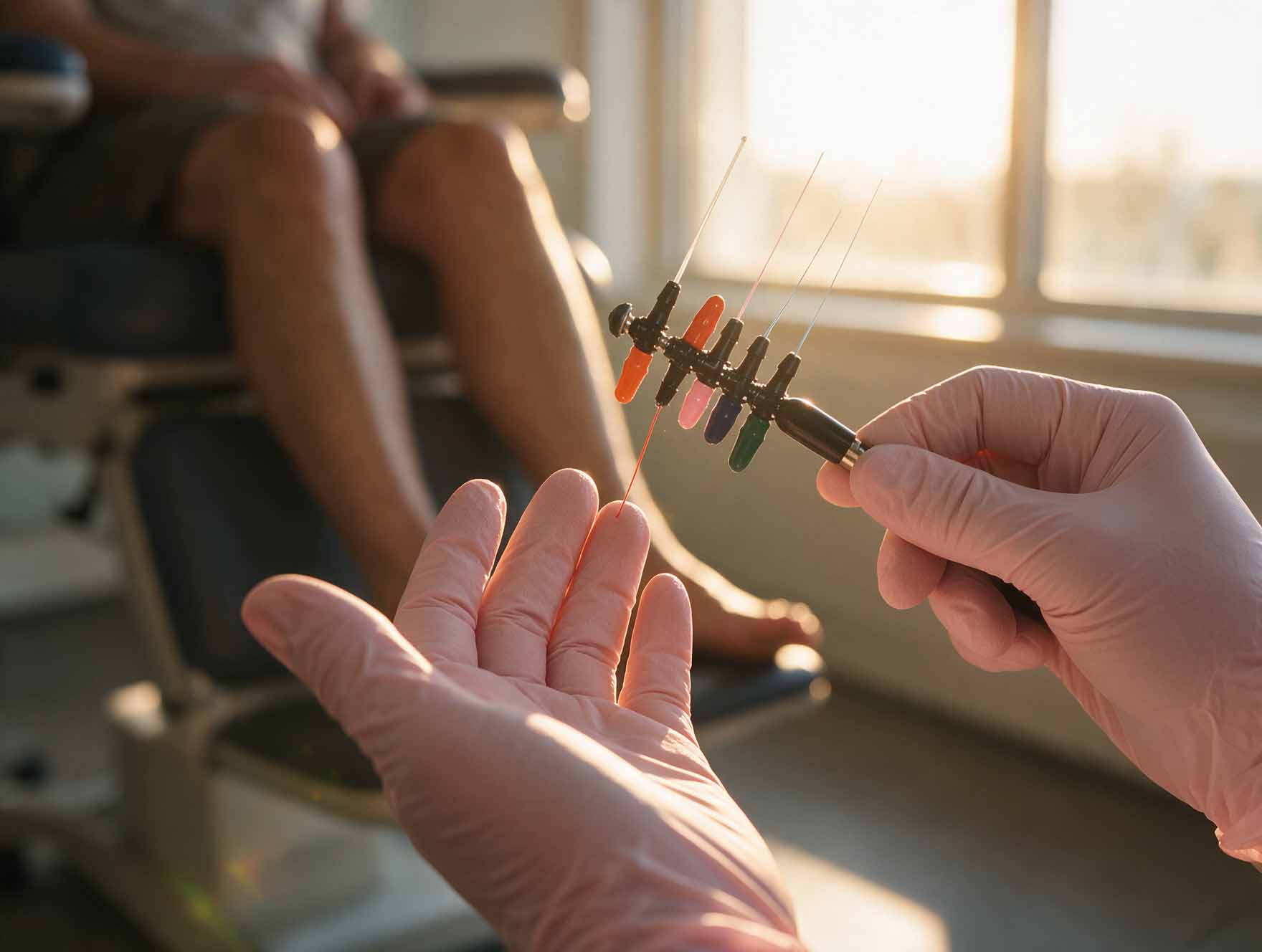
In routine practice, neuropathy is still assessed largely as present or absent, using a 10-gram monofilament and a tuning fork. By the time a patient fails the monofilament test, much of the nerve damage has already occurred. In the Rotterdam Diabetic Foot Study, researchers followed 416 people with diabetes and graded their sensory loss on a 39-item scale. Ulcer incidence rose steeply with each grade, from zero in people with intact sensation to more than 60 per 100 person-years in the most affected group. Sensory loss is gradable, and that grade predicts who will ulcerate.
The same group also found that nerve compression at the ankle, at the tarsal tunnel, is common in people with diabetes and adds to sensory loss on the sole of the foot. That observation is the basis for one of the trials described below.
Finally, care is fragmented. The strongest diabetic foot teams bring together internists, vascular surgeons, wound nurses, orthopedic shoemakers, rehabilitation physicians, dermatologists and podiatric specialists. Yet many patients see these professionals in sequence rather than together, and lose weeks they cannot afford.
Where the evidence is heading
Three lines of research give cause for cautious optimism.
Treating the nerve, not only the wound. Nerves in people with diabetes are often swollen and can become trapped where they pass through narrow anatomical tunnels. Releasing those compressions surgically may restore sensation and lower ulcer risk, but the evidence has so far come mainly from non-randomized studies. The Dutch DeCompression (DECO) trial is testing this properly: 344 people with diabetic neuropathy and nerve compression at the ankle, randomized across Dutch hospitals to decompression surgery or usual care, with four years of follow-up. The primary outcome is quality of life, and cost-effectiveness is a key secondary outcome. Its results will help decide whether nerve decompression belongs in prevention pathways.
Cardiometabolic drugs that reach the limb. For years, glucose-lowering therapy was judged mainly on HbA1c. That has changed. In the STRIDE trial, published in The Lancet in 2025, semaglutide improved maximum walking distance by 13% versus placebo in 792 people with type 2 diabetes and symptomatic peripheral artery disease, along with pain-free walking and quality of life. Walking distance is not the same as limb salvage, and dedicated trials with ulcer and amputation endpoints are still needed. But it signals that drugs can act on the vascular drivers of foot disease, not only on blood sugar.
Measuring what matters, in the real world. New data from the NIH-funded Diabetic Foot Consortium show that, under real-world standard care, only about 26% of ulcers heal by 12 weeks and about 10% of patients undergo amputation by 32 weeks. Two simple baseline measures, wound area and wound duration, predicted healing better than wound depth. In parallel, a 2026 study in Diabetic Medicine showed that Queensland’s funding of faster access to specialist foot services returned nearly eight dollars for every dollar invested, measured with linked real-world data. Both studies show how much rigorous observational research can tell us when it is designed well.
What this means for the next generation of trials
For companies developing drugs, devices and digital tools in cardiometabolic disease, the diabetic foot is both a large unmet need and a demanding place to run research. Five design choices make the difference.
- Enrich for risk, precisely. Prevention trials fail when event rates are too low. Graded sensory loss, prior ulceration, peripheral artery disease and kidney function can identify people who will actually ulcerate within a trial’s timeframe, making studies smaller and faster.
- Use realistic control-arm assumptions. A 2025 meta-analysis of 32 trials found that only about one in three ulcers healed under standard care, and real-world rates are lower still. The Diabetic Foot Consortium analysis estimated that detecting a 20-percentage-point difference in healing needs about 180 participants, while a 10-point difference needs 650 to 780. Eligibility criteria alone can shift a trial’s result by more than the intervention.
- Follow patients long enough, and count amputation properly. A 12-week healing endpoint can miss real benefit in larger ulcers. Amputation should be analyzed as a competing outcome, not censored away. Ulcer-free days, amputation-free survival and hospitalization matter to patients, payers and regulators alike.
- Build in health economics from the start. As the DECO and Queensland studies show, cost-effectiveness and return on investment increasingly decide whether an intervention reaches patients. These data are far easier to collect prospectively than to reconstruct afterward.
- Combine trial and real-world evidence. National claims and registry data reveal natural history, long-term mortality and care pathways that no single trial can capture. They can inform feasibility, external comparators and post-approval evidence. Regulators are paying increasing attention to such data across the product lifecycle.
People with diabetic foot disease also carry very high cardiovascular risk. That makes them an important, and often underrepresented, population in cardiovascular, renal and metabolic outcome trials, where limb outcomes deserve a place among the secondary endpoints.
At AKEURA, a focus on cardiometabolic disease and combined expertise in clinical development and real-world evidence allow the team to support sponsors across this whole spectrum: from protocol design and risk-enriched recruitment to long-term follow-up and real-world evidence generation.
Early action, measured in steps
A diabetic foot ulcer is rarely just a wound. It is the visible edge of a body in systemic trouble: nerves that no longer warn, arteries that no longer feed, a heart and kidneys already under strain. Fewer than one in three people who undergo a major amputation will be alive five years later, yet that path almost always begins with a small, painless break in the skin that could have been seen coming. Early action on diabetes must therefore be measured at the feet: in sensory loss that is graded rather than ticked off, in specialist care reached in days rather than weeks, and in trials built around what patients value most, which is walking, healing, keeping their limbs and staying alive. The knowledge and tools to change this trajectory already exist. What the field needs now is the resolve to use them early, and the scientific rigor to prove what works.
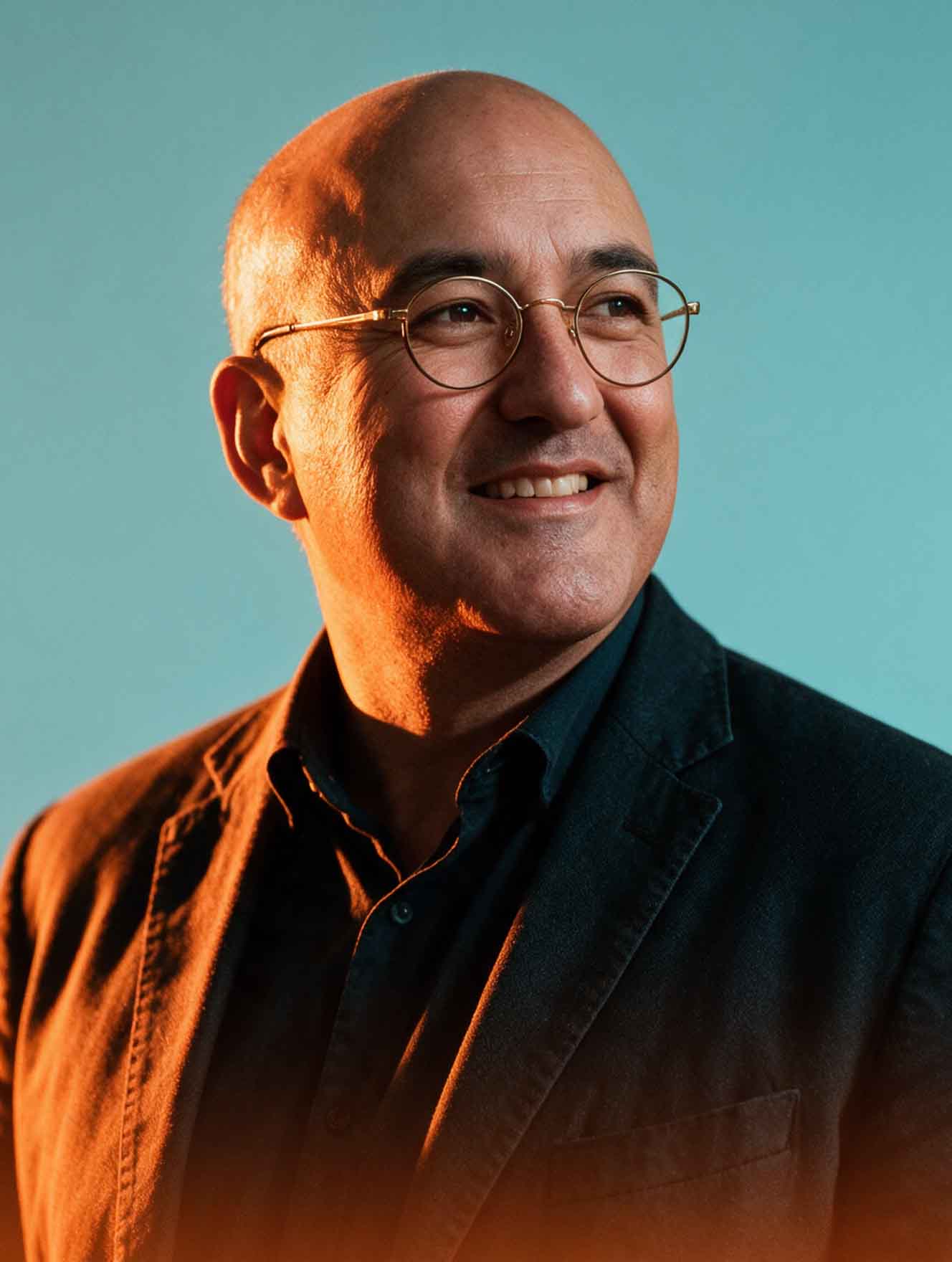
Manuel Castro Cabezas, MD, PhD, is a Scientific Officer at AKEURA, an internist-endocrinologist and vascular specialist at Franciscus Gasthuis & Vlietland, Rotterdam, and Associate Professor of Internal Medicine and Endocrinology at Erasmus MC.

 News

 Event
 Expert